Blog
Perspectives on CDN architecture, web security, and cross-border performance from our engineering team.

Your Site Is Behind a CDN, So Why Is the Origin Still Overloaded? Building Origin Resilience, From Caching and Dynamic Requests to Failover
Your site already runs on a CDN, yet logins, inventory checks, and checkout still time out? Learn how Origin Resilience keeps critical services running: cutting unnecessary origin fetches, controlling dynamic requests, and planning releases, failover, and testing.
2026-11-14 · ByteShield Team

What Is CDN Cache Poisoning? Cache Keys, Request Handling, and the Keys to Prevention
The same URL does not always mean the same content. Learn how CDN cache poisoning happens, and how cache keys, caching directives, and staged testing keep your CDN's decisions in line with your origin.
2026-11-04 · ByteShield Team

Can't Patch a PHP Vulnerability Right Away? Use a WAF to Reduce Risk and Buy Time for Server Updates
When a critical PHP vulnerability goes public, server updates still need version checks, compatibility testing, and a deployment plan. Learn how WAF virtual patching reduces exploitation risk at the traffic entry point, the three things to confirm first, and how to roll out the patch in stages.
2026-10-24 · ByteShield Team
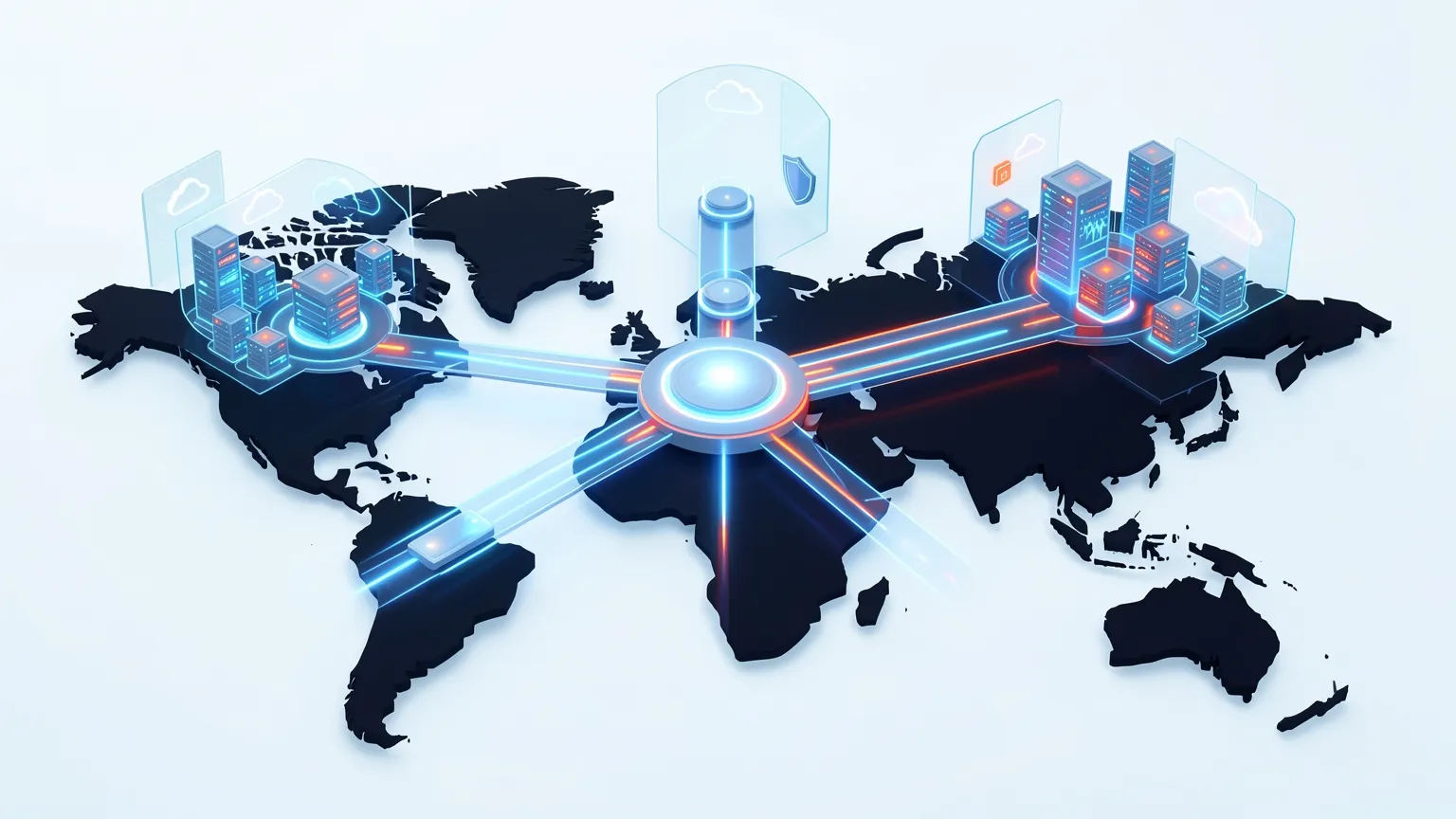
How Does Multi-CDN Achieve Smart Traffic Steering? From DNS Resolution to Cross-CDN Traffic Splitting and Failover
When a business uses several CDNs at once, how should it distribute traffic and fail over? Learn how DNS Traffic Steering manages Multi-CDN traffic entry points through Geolocation Routing, Weighted Routing, and CNAME / IP onboarding.
2026-10-14 · ByteShield Team

From L3/L4 to L7: How to Build a Multi-Layer DDoS Defense Architecture
Different DDoS attacks happen at different Layers, so a single protection mechanism is rarely enough. Learn which risks DDoS Protection, CC Defense, and Bot Management each handle, and how to build a multi-layer defense from Traffic to Request to Behavior.
2026-10-04 · ByteShield Team

DDoS Attack Types Explained: From Volumetric Floods to CC and L7 Attacks
DDoS is not just a bandwidth problem. From Volumetric and Protocol to Application Layer (L7) attacks, each type drains a different resource: bandwidth, connections, or application processing capacity. Learn how BPS, PPS, RPS, and CC Attacks differ so you can tell which resource an attack is actually consuming.
2026-09-24 · ByteShield Team

SDK Integration FAQ: Real IP, Proxy Protocol and Custom Headers
The hardest part of integrating a Security Acceleration SDK is not the init function but the details of the proxy architecture: does the origin see the node IP or the player IP? Should real IP use Proxy Protocol, TOA, or an API? Does the SDK add custom headers? Why must you fetch a new proxy address after reconnecting? A walkthrough that follows the actual integration flow.
2026-09-14 · ByteShield Team

Security Acceleration SDK Capacity Guide: Bandwidth, DAU and QPS
When companies evaluate a Security Acceleration SDK, the first questions are rarely about code: what resources power the routes, how bandwidth is calculated, and how to scale as users grow. A look at the SDK's globally distributed edge node architecture, what bandwidth, DAU, and QPS each measure, the two expansion paths, and what you can configure yourself in the console.
2026-09-04 · ByteShield Team

AI Agent Security: How a Security CDN Defends Against API Abuse and DDoS
When AI agents start calling APIs on behalf of users, the question is no longer whether traffic is automated but which machine identity is behind it, what it may do, and whether its behavior makes sense. How AI agents create API abuse, resource exhaustion, and DDoS risk, and how a Security CDN builds layered defense.
2026-08-24 · ByteShield Team

From DNS Hijacking to Second-Level Scheduling: The Evolution of App Security Acceleration
Why DNS-and-CDN app architectures fail under hijacking and pollution, and how a security acceleration SDK enables second-level device-edge scheduling.
2026-08-14 · ByteShield Team

RIM vs CN2: A Complete Comparison for China Cross-Border Acceleration
RIM balances cost, cross-border performance, and protection flexibility; CN2 delivers low latency and stable routing. Compared by scrubbing and use cases.
2026-08-04 · ByteShield Team

How to Fix Cross-Border API Latency: Web Performance Optimization Through Dynamic Acceleration
Pages load fast but login, search, and checkout lag? Dynamic acceleration cuts cross-border API latency with intelligent routing and TCP optimization.
2026-07-14 · ByteShield Team

Expanding Globally but Your Site Can't Keep Up? The Infrastructure Challenge Behind Emerging Markets
Public cloud plus a global CDN still leaves emerging-market users lagging. How dynamic acceleration and smart routing fix cross-border API latency.
2026-07-04 · ByteShield Team
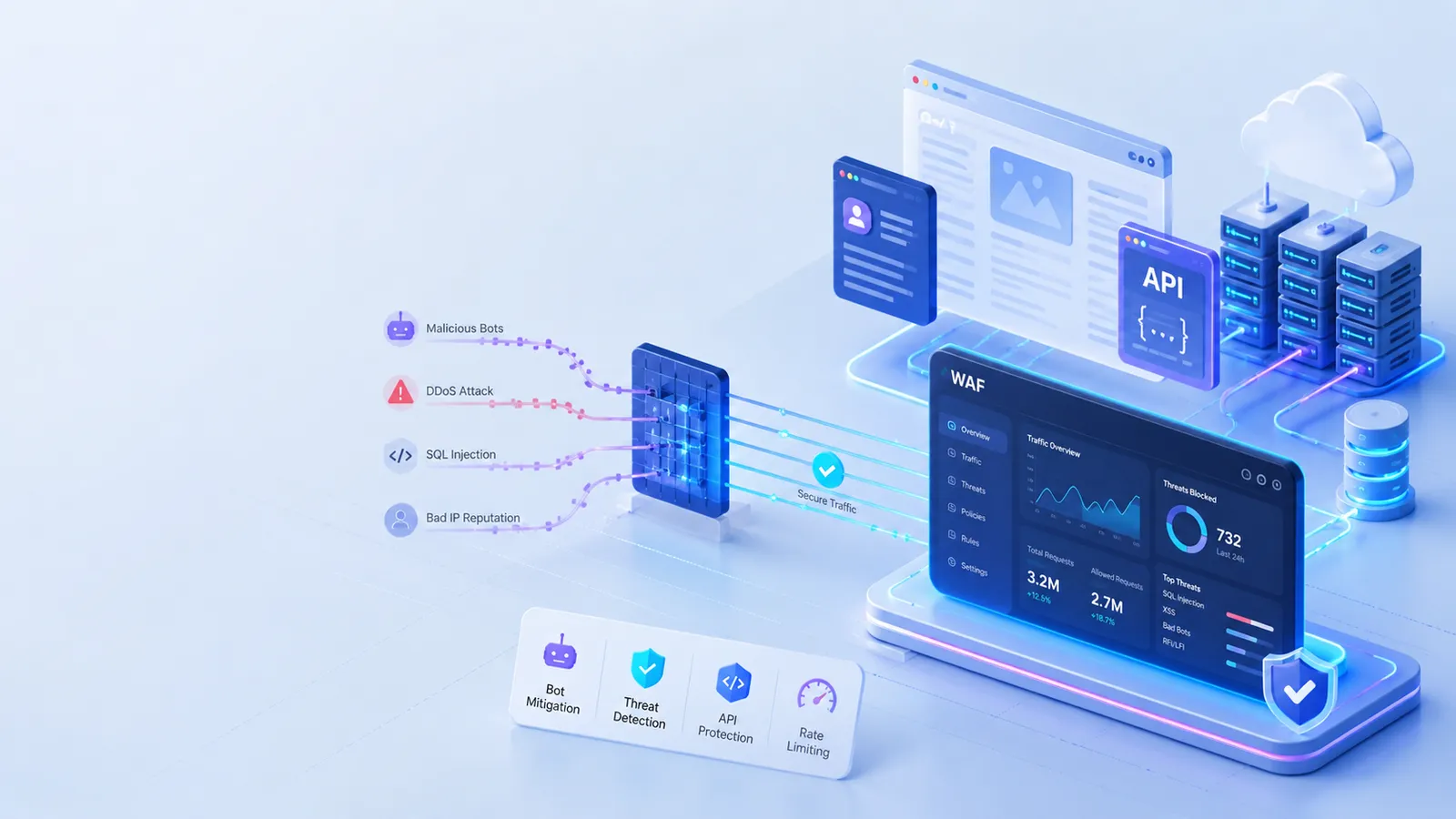
Why Modern Businesses Need a WAF: From Passive Defense to Active Risk Management
Why modern businesses need a WAF: SQL injection, bot attacks, and API abuse hide in normal traffic that firewalls and DDoS protection cannot see.
2026-06-24 · ByteShield Team

Using CDN as a Front-Line Load Balancer: Modern Traffic Distribution at Scale
Use a CDN as a front-line load balancer: edge caching absorbs 80%+ of traffic before your data center, and multi-origin failover switches in seconds.
2026-06-14 · ByteShield Team

World Cup Streams Without Stutter: The Low-Latency Keys From CDN to Streaming Architecture
What keeps World Cup streams smooth at peak: end-to-end latency control, adaptive bitrate (ABR), regional edge capacity, and China cross-border delivery.
2026-06-04 · ByteShield Team

From CDN to Cross-Border Routing: The Infrastructure Behind Large Live Events
Keep large live events stable at peak: CDN distribution, cache and origin strategy, DDoS protection, and real-time monitoring for streaming platforms.
2026-05-24 · ByteShield Team

From Gaming CDN to Traffic Scrubbing: A Practical Look at DDoS Protection Strategy
Why gaming platforms are prime DDoS targets and how layered defenses, edge traffic scrubbing, rate limiting, and cross-border routing keep players online.
2026-05-02 · ByteShield Team

Is Your CDN Actually Working? A Troubleshooting Guide From Speed Tests to Cache Hit Ratio
CDN in place but no speed gains? How to verify it with multi-region speed tests, TTFB, cache hit ratio, HIT/MISS headers, and cross-border route analysis.
2026-05-01 · ByteShield Team

China Acceleration: Improve Speed Without an ICP License
Improve China access without an ICP license: cross-border CDN nodes in Hong Kong, Japan, or Singapore plus RIM and CN2 routes, with real latency numbers.
2026-03-26 · ByteShield Team