Why Modern Businesses Need a WAF: From Passive Defense to Active Risk Management
Published on 2026-06-24|By ByteShield Team
Key takeaways
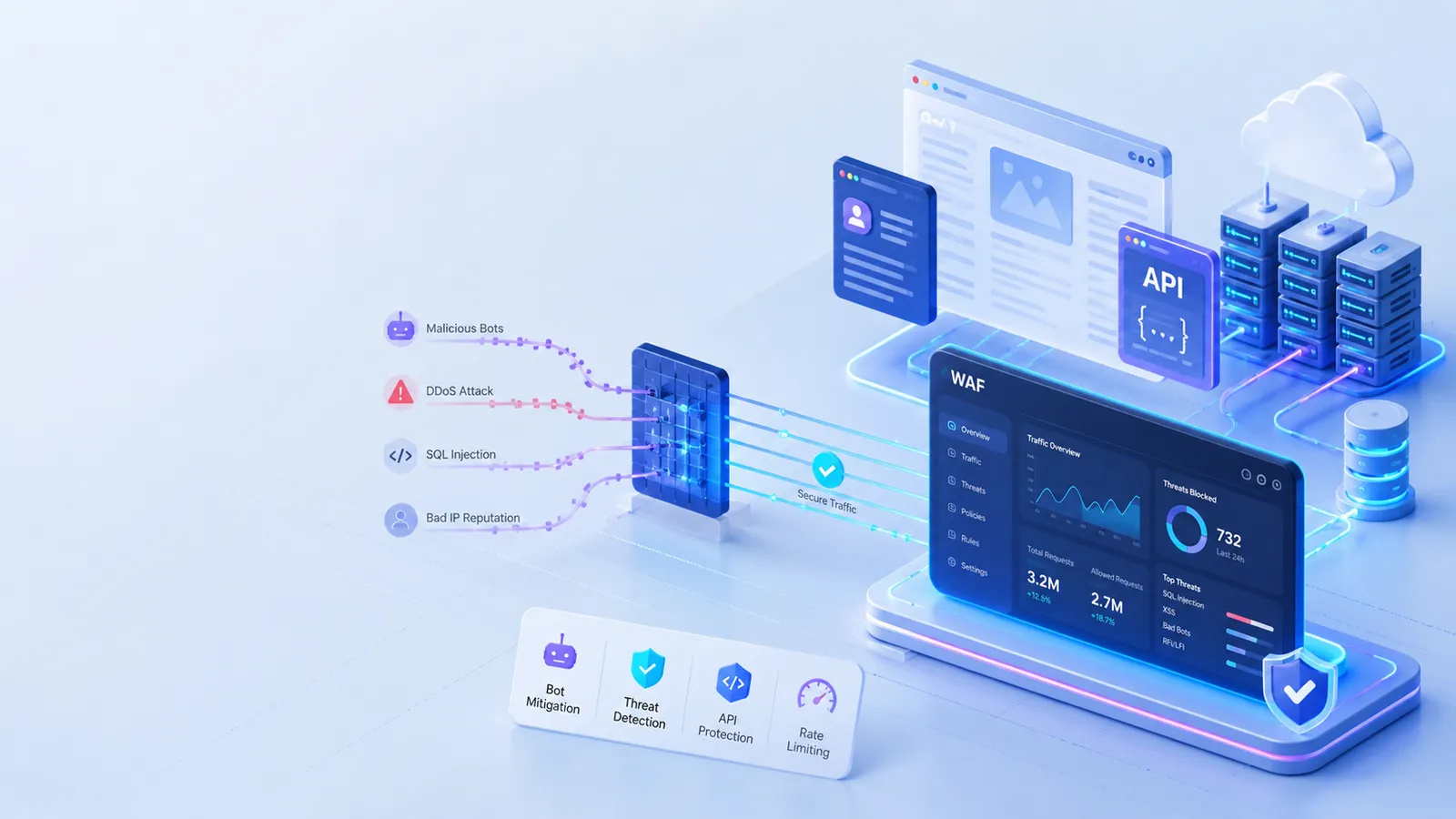
- The costliest breaches rarely take a site offline: they hide inside normal-looking traffic, and firewalls or DDoS protection alone cannot see application-layer attacks like SQL injection, brute-force logins, or unauthorized API access.
- A WAF shifts security from passive, after-the-fact response to active interception, using real-time rule updates, threat intelligence, and behavioral analysis to stop suspicious behavior before it causes damage.
- Modern WAF protection now extends beyond vulnerability defense to bot management and API security, since attackers increasingly target APIs directly and automated bots drain resources and revenue.
- For high-stakes industries such as iGaming, e-commerce, and payment platforms, a WAF is no longer an optional add-on: it is standard infrastructure that must be in place before a site goes live.
When businesses talk about website security, the threat mentioned most often is the DDoS attack. After all, when a site is unreachable and service goes down, the problem is noticed immediately and hits operations directly.
But looking at security incidents in recent years, what actually costs companies the most is rarely a site being knocked offline. It is an attacker who has already gained access to data while the site appears to be running normally.
These attacks are dangerous precisely because they hide inside normal traffic. The website keeps running, service is not interrupted, and the company may have no idea anything is wrong. It is only after data is leaked, accounts are hijacked, or internal systems are breached that the problem comes to light. For this reason, the security needs of a business are no longer only about fending off large-scale attacks. They are about proactively identifying and intercepting the risks hidden inside normal traffic.
The Firewall Is On, So Why Can Hackers Still Walk in Through the Front Door?
Many companies believe that deploying a firewall, antivirus software, or DDoS protection already gives them complete website security. But these tools mainly protect the network layer and the infrastructure layer. The real risk often comes from the web application itself.
Brute-force attempts on a login page, SQL injection through a form, or unauthorized access to an API endpoint can all launch an attack using requests that look perfectly normal. Because this traffic is so close to ordinary user behavior, traditional security appliances often struggle to identify it.
This is why the WAF (Web Application Firewall) has steadily become an essential part of website security. What businesses need is not only to block large volumes of abnormal traffic, but also to recognize the potential risk hidden inside legitimate-looking requests.
From Passive Defense to Active Interception: The Role of the WAF Is Changing
Most older security architectures were a form of passive defense. Companies usually began tracing the source of a problem only after an incident occurred, through alerts, log analysis, or manual investigation.
In a modern web environment, however, a site can generate hundreds of thousands or even millions of requests every day, mixed in with automated attacks, vulnerability probing, abnormal logins, and malicious crawlers.
By the time a company notices something is wrong, the attack has often already done damage. This is why more and more businesses now treat the WAF (Web Application Firewall) as a key part of proactive security defense.
The value of a WAF is not only blocking known attacks. It is identifying suspicious behavior and intercepting it before the risk causes real impact. With real-time rule updates, threat-intelligence integration, and behavioral analysis, a WAF helps a business shift from handling problems after the fact to preventing risk before it happens.
APIs and Automated Bots: Two of Hackers' Favorite New Openings
As microservices and dynamic applications have spread, modern website architecture relies more and more on APIs. From app integrations and third-party payment verification to member data lookups, it all runs on APIs behind the scenes. This boosts efficiency, but it also opens an entirely new attack surface. Many attackers now skip the web front end altogether and send malicious requests straight to the API.
At the same time, automated bot attacks are growing explosively. Malicious ticket grabbing, credential stuffing, coupon abuse, and competitors scraping content all generate traffic that looks like individual users on the surface, but is really a vast army of bots behind the scenes. This not only drains server compute resources continuously, it eats directly into a company's actual revenue. As a result, the defensive scope of a modern WAF has expanded from simple vulnerability protection into a combination of bot management and API security.
iGaming, E-commerce, and Payment Platforms: The High-Stakes Front Line
For an ordinary content website, a security incident may affect service quality for a short while. But for iGaming, payment platforms, cross-border e-commerce, and digital finance sites, every breach corresponds to direct financial loss and the collapse of brand trust.
A single successful payment fraud can leave a company facing huge liabilities. One large-scale account takeover can dismantle a painstakingly built member ecosystem overnight. In highly regulated, high-cash-flow industries, a WAF is no longer an optional add-on bought only when budget is left over. It is standard infrastructure that cannot be missing before a site goes live.
The Hardest Risk to Spot Usually Hides in the Most Normal Traffic
As web applications grow more complex, the security risks a business faces are no longer only about whether the site stays up. What truly deserves attention is the abnormal behavior hidden inside normal traffic.
When a company assesses website security, the question is no longer "Will we become a target?" It is "When an attack disguises itself as a normal user, do we have the ability to spot it early and stop it?"
From Availability to Application-Layer Security: Building a More Complete Defense
The risks facing modern websites are no longer limited to DDoS attacks. They come from more hidden threats such as API abuse, automated bots, account takeover, and application vulnerabilities.
If your business involves member systems, payment services, high-traffic APIs, or a global service architecture, now may be the best time to revisit your website security strategy.
ByteShield provides integrated WAF, bot mitigation, and DDoS protection with traffic management, helping businesses identify and block potential risks more effectively without affecting the experience of legitimate users.
FAQ
What can a WAF detect that a firewall cannot?
Firewalls, antivirus software, and DDoS protection mainly protect the network and infrastructure layers. A WAF identifies application-layer attacks that use normal-looking requests, such as brute-force attempts on login pages, SQL injection through forms, and unauthorized access to API endpoints.
How does a WAF enable proactive security instead of passive defense?
Instead of tracing problems after an incident through alerts and log analysis, a WAF uses real-time rule updates, threat-intelligence integration, and behavioral analysis to identify suspicious behavior and intercept it before the risk causes real impact.
Which businesses need a WAF the most?
High-stakes industries such as iGaming, payment platforms, cross-border e-commerce, and digital finance, where every breach means direct financial loss and damaged brand trust. Any business with member systems, payment services, or high-traffic APIs should treat a WAF as standard infrastructure before going live.
Talk to the ByteShield team and assess the security of your current architecture together.